The neighbourhood
Dongdaemun: the Great East Gate, the market and the Design Plaza
The district around the concert room, from a gate first built in the 14th century to a market that opened in 1905 and a design landmark finished in 2014.
Reserve my seat ↗Quick answer
Dongdaemun means Great East Gate, and the district takes its name from Heunginjimun, a gate in Seoul's city wall first built in 1398 and rebuilt in 1869. Around it grew Dongdaemun Market, which Wikipedia says opened in 1905, and on the site of the old stadium stands the Dongdaemun Design Plaza, opened in 2014. The Onggi Concert's page places its room in the Dongdaemun Shopping Complex, so this is the neighbourhood in which your evening happens.
The gate
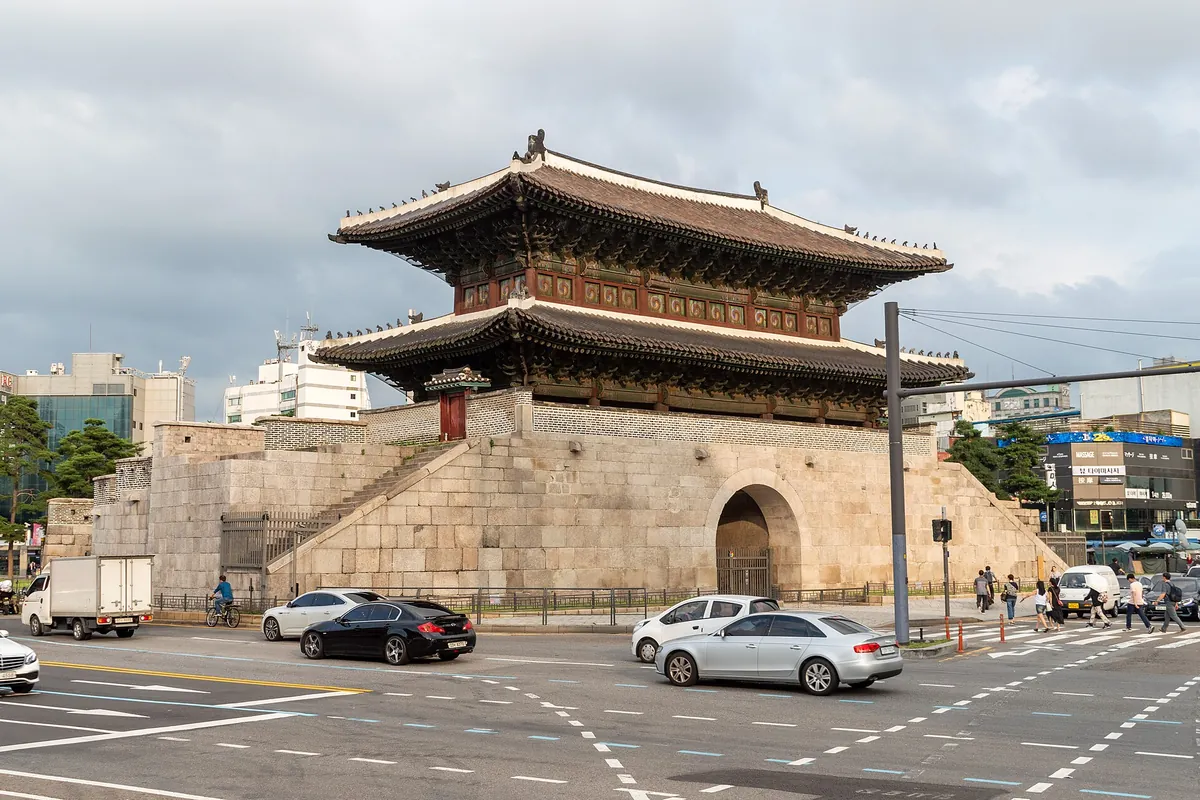
Heunginjimun, whose name Wikipedia translates as the Gate of Rising Benevolence, is also known as Dongdaemun, the Eastern Great Gate. It is one of the Eight Gates of Seoul in the Seoul City Wall and a prominent landmark in central Seoul. The article says it was first built by King Taejo in the fifth year of his reign, 1398, renovated in 1453, and that the present structure is the one rebuilt in 1869. It shows the architectural style of the late Joseon period, and its most unusual feature is an outer wall, the ongseong, built to protect the gate's weak point against multiple attackers.
The market
Dongdaemun Market is described by Wikipedia as a large commercial district in Jongno District, a popular shopping and tourist destination designated a Special Tourism Zone in 2002. It opened in July 1905 in Yeji-dong, and in the period of Japanese rule it was known as Baeogae Market, meaning pear tree hill market. It was destroyed in the Korean War and slowly rebuilt, with a building constructed in 1959 and large shopping malls added in 1998 and 1999. The article lists silks and fabric, clothes, shoes and leather goods among its goods, and says street snacks such as soondae and mandu feature in its food areas. It was traditionally a night market.
The stadium that became a plaza
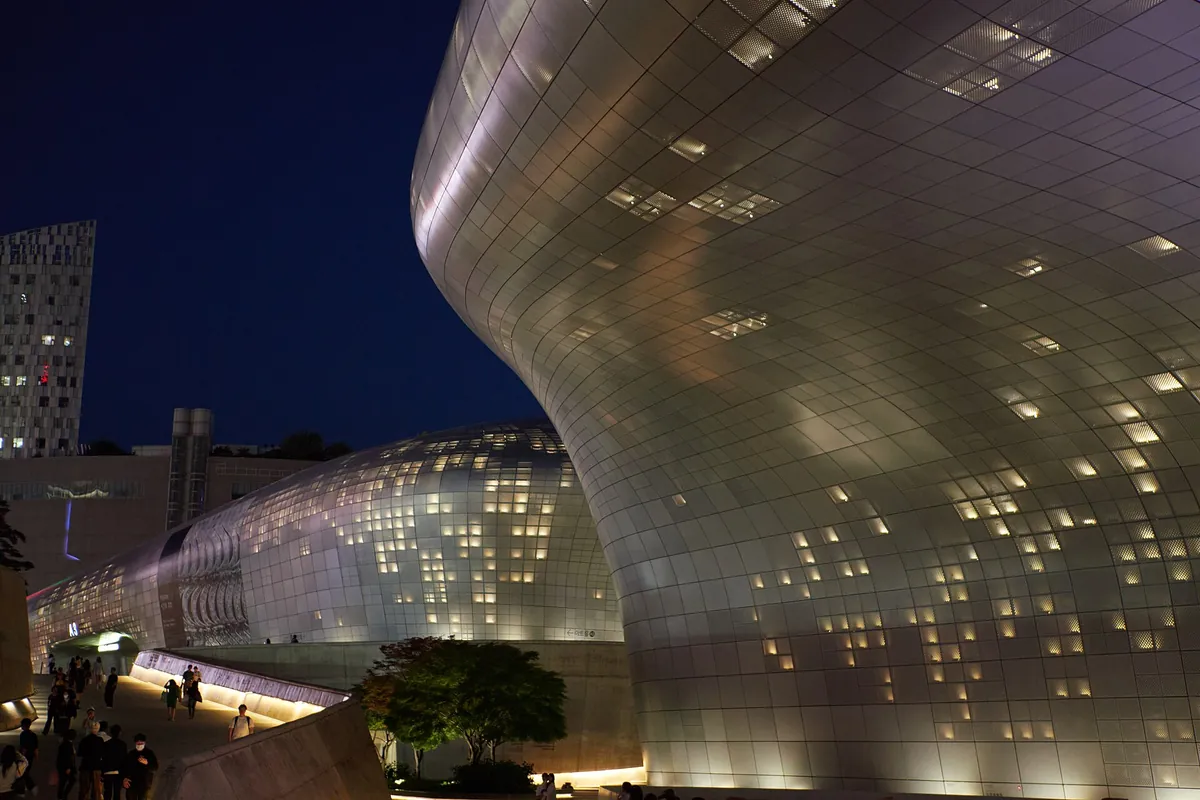
The Dongdaemun Design Plaza, known as the DDP, was designed by Zaha Hadid with a neofuturistic form of curving surfaces. Wikipedia says it replaced Dongdaemun Stadium, the first modern stadium in Korea, where national sports and celebration events were held from 1925 until its demolition in 2007. Construction began in 2009, and the DDP was inaugurated on 21 March 2014. It houses exhibition halls, a design museum and a design market, and the article says it was one of the main reasons for Seoul's designation as World Design Capital in 2010. A walkable park sits on its roofs, and parts of the restored Seoul fortress lie within the site.
Where the concert sits
The concert's listing places its room at Gwangmudae, on the ninth floor of Building N in the Dongdaemun Shopping Complex, on a site that once housed a traditional arts theatre. That is the page's wording, and this guide has no further record of the building's history. The setting is an interesting contrast: a handmade, unamplified performance inside a district known for fashion wholesale and retail. Many visitors treat the area as a place to shop and eat, so a concert gives it a second character.
A short walk through time
Taken together, the gate, the market and the plaza span more than six centuries of Seoul's history, from the late 14th century to the 21st. The gate was built under the Joseon founders, the market opened in the early 20th century, the stadium hosted national events for much of that century, and the plaza opened in 2014. If you have time before the performance, the gate and the plaza are both described by Wikipedia as landmarks of the district, but check their opening arrangements on their own pages and do not assume they are open at any hour.
Frequently asked questions
What does Dongdaemun mean?
Great East Gate, says Wikipedia, which is the common name of Heunginjimun.
When was the Design Plaza opened?
It was inaugurated on 21 March 2014, according to Wikipedia.
Is the concert held in the Design Plaza?
No. The page places it in the Dongdaemun Shopping Complex, at Gwangmudae.
Sources