Start here
Is the Onggi Concert in Seoul worth it? A 5.0 from 65 guests, weighed
An unamplified Korean performance for thirty guests, weighed on what the booking page states: who it suits, what the programme might be and how to decide.
Reserve my seat ↗Quick answer
Yes, provided you want closeness more than scale. GetYourGuide rates it 5.0 across 65 reviews, with fares from roughly US$94 a guest, for a salon-sized performance of Korean traditional music and dance with English commentary, tea and sweets at your table, an artist talk and a turn at the instruments afterwards. There are only thirty seats, and the page says no microphones are used, because onggi earthenware jars give the room its resonance. The performance itself lasts fifty to sixty minutes inside an evening of about two hours. If you want a lavish multi-act show on a big stage, look elsewhere; if you want to hear a janggu drum or watch a scarf dance from a few steps away, this is your evening.
The Onggi Concert at a glance
| Humanscale Onggi Concert | |
|---|---|
| The evening | A salon performance of Korean traditional music and dance, with an English host |
| Length | About two hours in all, with a performance of fifty to sixty minutes, says the page text |
| The room | Gwangmudae, ninth floor, Building N, Dongdaemun Shopping Complex; thirty guests |
| The sound | No microphones; onggi jars give natural resonance, says the page |
| At your table | Tea and sweets; the page lists no meal |
| Rating | 5.0 from 65 reviews on GetYourGuide |
| Changing plans | Free, with payment later |
The verdict, then the reasoning
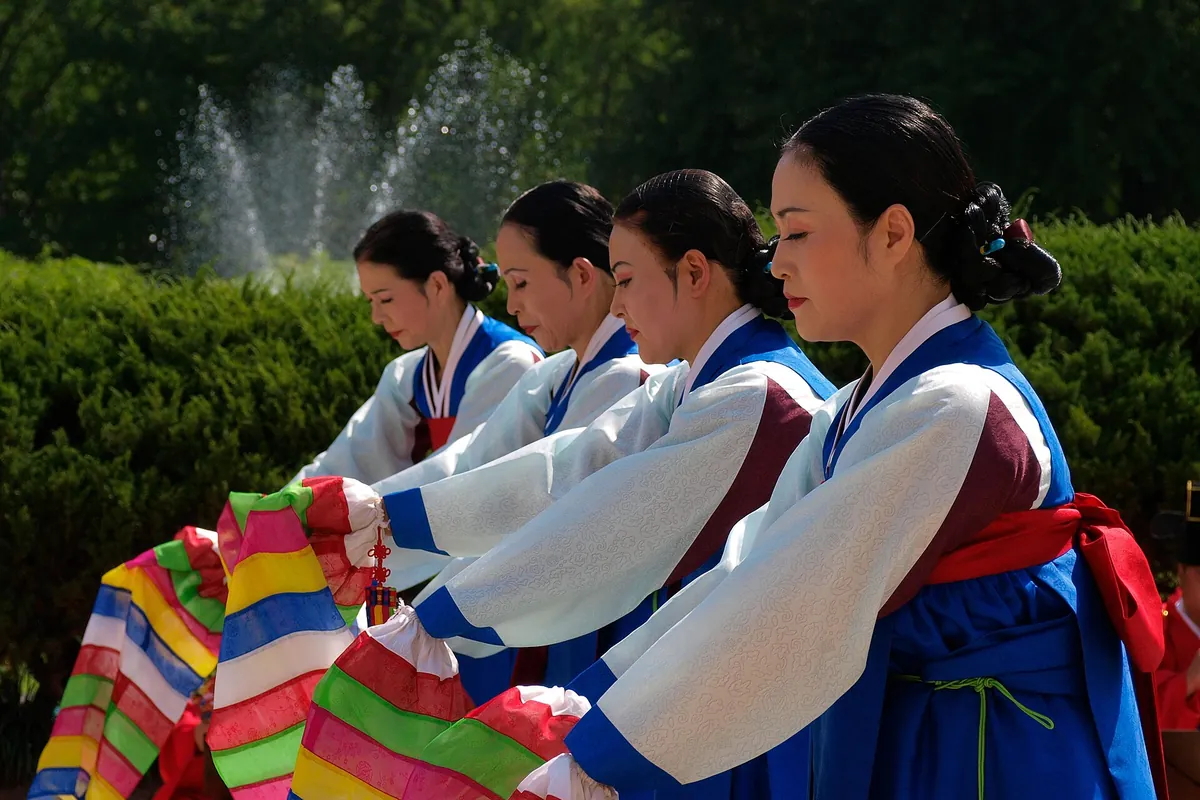
Choose it if what appeals is hearing Korean percussion and watching Korean dance from close range, in a room small enough that you are part of it. That settles most of the question. The format matters more than the stars or the price, since a salon performance is its own kind of outing. You sit at a table with tea, a small crowd shares the room, and the musicians and dancers work a few steps from you with nothing between their sound and your ears. Anyone curious about why Korean drumming feels the way it does, and not merely keen to tick off a show, is the natural audience. Someone who hopes for a full-length production with sets, costume changes and a large cast should know that this is a lighter and more intimate thing. Judged as a close encounter with a living tradition, set inside one of Seoul's busiest shopping districts, it earns its place on an itinerary.
What the booking page actually says
The product is an intimate performance of Korean traditional music and dance for thirty guests, held at Gwangmudae, which the page places on the ninth floor of Building N in the Dongdaemun Shopping Complex, on a site that once housed a traditional arts theatre. A host speaks English throughout. The page says the room uses no microphones and credits onggi, the large earthenware jars of the Korean kitchen, with giving the performance its natural resonance. Tea and sweets are served at your own table. After the performance there is an artist talk and photos, and then you can try the instruments and be photographed in hanbok, the traditional Korean dress. In all, the page describes an evening of about two hours, with the performance itself taking fifty to sixty minutes. It states no menu beyond tea and sweets, no running order and no fixed list of performers, so this guide does not either.
Two programmes, and the calendar decides
The page is plain that the programme depends on the date. On some dates you see a folk performance of the kind Korean sources group under yeonhui, with a janggu drum solo and a hand-drum dance. On others you see traditional dance: the salpuri scarf dance, a court sword dance and a janggu dance. You cannot ask for one over the other, and the page makes no promise about which falls on a given night, so the sensible habit is to read the option on the calendar when you choose a date. Both programmes lean on percussion and movement, so a visitor who likes one is unlikely to be disappointed by the other, but someone with a strong preference for scarf dance, say, should check carefully and accept some uncertainty. Whatever you see, the commentary is in English.
Reading the 5.0: what it shows and what it hides
A flawless 5.0 is unusual, and it is the best score a listing can display. It stands on 65 reviews, a small fraction of the audiences behind the walks and border tours listed beside it, so a few lukewarm opinions would shift it noticeably. Take it as a sign that most guests left happy, not as a promise about your night. What the page promises is modest and specific: a small room, a short performance, an English-speaking host and some hands-on time at the close. People who book for those things tend to leave satisfied; people who book hoping for a grand production would be judging it by the wrong yardstick. The top-rated label on the listing points the same way.
Why unamplified sound is the point
Most traditional-music evenings for visitors use a microphone and a speaker. This one does not, according to its page, and the claim is worth understanding. Wikipedia describes onggi as earthenware with a microporous body, which lets air pass through while holding water in, and that is why Korean cooks ferment soy sauce, gochujang and kimchi in them. A large hollow vessel also behaves as a resonator, so the page's idea, that jars arranged in the room give the sound a natural bloom, is plausible without being something this guide can test. What you can rely on is the plain consequence: with no amplification, the dynamic range is wide. A janggu struck hard is loud, a scarf drawn slowly is silent, and the contrast is the experience.
The janggu you will probably hear
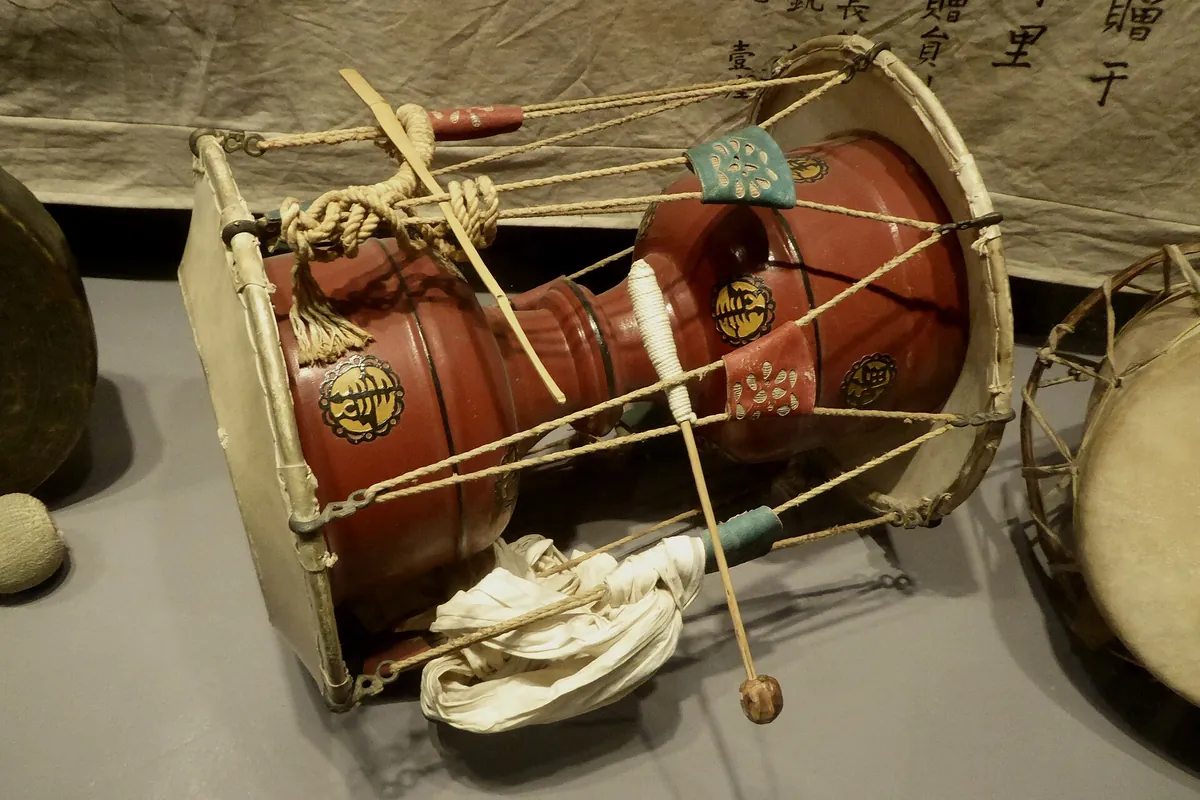
The janggu is the hourglass-shaped drum central to Korean traditional music, and the page names a janggu solo and a janggu dance among its possible pieces. Wikipedia says its two heads differ in pitch and timbre, and that the pairing is believed to represent the harmonious joining of yin and yang. The left head, covered in thick hide, gives deep tones; the right, covered in lighter hide, gives high ones. Traditionally a player strikes the right head with a stick and the left with a bare hand, which is why a good solo can sound like two instruments in conversation. When the page's closing offer arrives and you try the instruments yourself, you will find out quickly how hard a steady rhythm is to keep. A later guide on this site explains where the drum sits in samul nori.
Who may want to pass
Pass if you want a long evening: the performance runs about fifty to sixty minutes, and the rest is tea, talk and photos. Pass if you need a large, raked theatre, since this is a salon. Pass if the thought of being asked to try an instrument or put on hanbok in front of strangers makes you uneasy, because the page presents that as part of the programme, although nothing says you must join in. And pass if you hope to eat dinner there, because the page lists tea and sweets and no meal. Dongdaemun is a market district with plenty of food, so eat before or after. Families with young children should read the option details on the calendar and decide for themselves, as this guide found no age rule stated on the page and does not invent one.
Who should book it
Couples looking for an evening with a distinct character, solo travellers who would like to be part of a small group, and visitors who enjoyed a museum case of Korean instruments and now want to hear them played. Travellers who enjoy craft will appreciate the onggi link, since the jars on show in museums are everyday objects of the Korean kitchen. It also suits a trip that already holds plenty of walking and sightseeing, because a seated performance gives your feet a rest while still being something you cannot see elsewhere in the same form. If you are travelling with a group of friends, thirty seats means you should book together, and early.
Booking, cancelling and what to do next
The calendar on this page shows which dates have seats. Cancelling is free, as the booking page states, and no money changes hands when you reserve, so a date held now can be let go later if plans change. The confirmation message repeats your date and carries the meeting details. For the Dongdaemun neighbourhood itself, the Great East Gate and the Design Plaza are both described in the last guide on this site, and for a second Seoul evening the next guide compares the concert with a night-time walk. Whichever you choose, treat the performance as the centre of the evening and leave the rest flexible.
Frequently asked questions
How many guests are there?
Thirty, says the booking page, which is why dates fill early.
Is it suitable if I do not know Korean music?
Yes. The host speaks English and gives commentary, so no background is needed.
Will I hear the same programme as another guest?
Not necessarily; the page links the programme to the date.
Should I eat first?
Yes, plan dinner separately, since the page lists tea and sweets and no meal.
Sources